September 22, 2025

Share



I don’t get it.
She was celebrating with a colleague. But the company just announced terrible results.

I don’t get it.
She was celebrating with a colleague. But the company just announced terrible results.
I did some digging.
Turns out, she wasn’t celebrating the company’s terrible year. She was excited that her team had a good one.
So was everyone else on her team. It meant they’d get full bonuses this year.
Who could blame them? I’d be excited too.
But still, it didn’t sit right.
The company failed. They didn’t care.
Then it hit me. The way we compensated our people was all wrong.
⁂
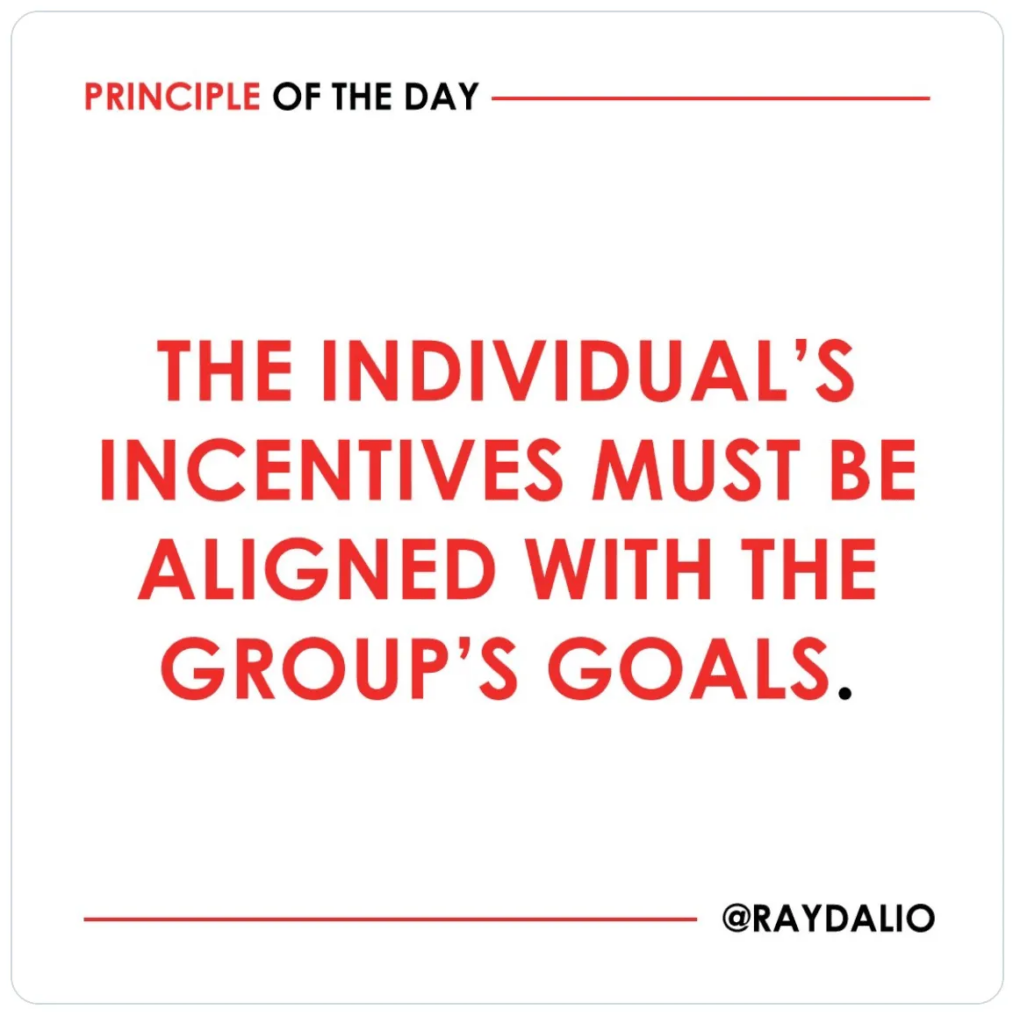
The scenario above is far too common. So much so that Ray Dalio made it one of his core leadership principles in his book, Principles.
But this is just one negative scenario of many. When incentives are misaligned, bad shit starts happening. Why? Because:
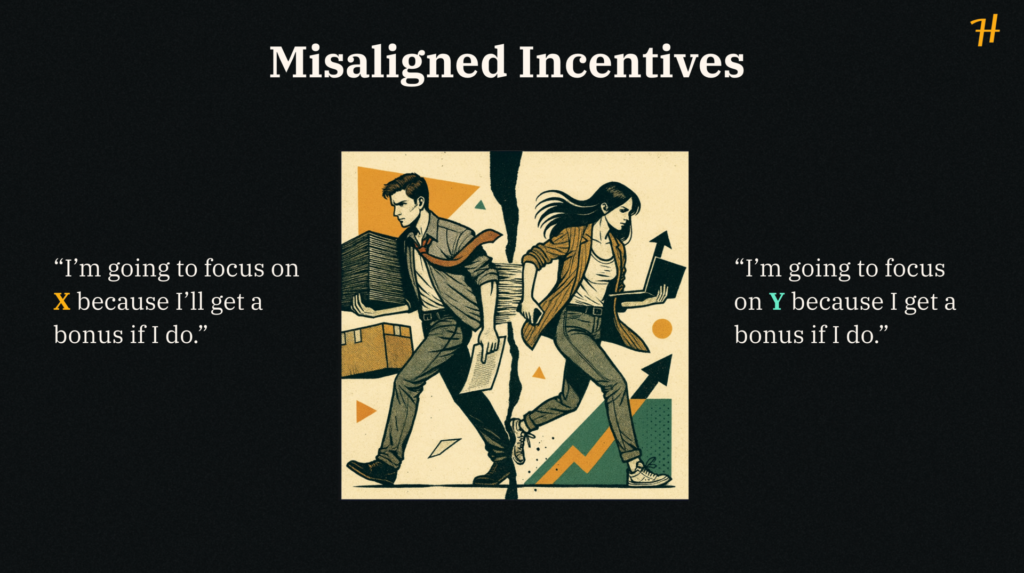
All of this stems from bad compensation design. And that’s on the leader.
You want your people making decisions together, in the best interest of the company. Not just themselves, or their team.

⁂
Comp design is one of the most powerful tools a leader has to create alignment. It drives behavior. So the design matters, a lot.
After 20 years of tinkering with comp design, I came to the conclusion that a well structured company-wide bonus plan is THE BEST TOOL to fix misalignment issues.
Yes, you can use equity or a profit share program too.
But neither gives you the flexibility and power to shape behavior like a bonus plan.
So why don’t more companies have a bonus plan?
Honestly, they’re kind of a pain in the ass to get right.
I studied dozens of companies trying to find a structure that worked.
Guess whose comp design I landed on? The $200 billion tech company, ServiceNow.
I didn’t see that one coming. But they had the strongest structure, and from what I could tell, it was genuinely appreciated by their employees (a key factor!).
So I took the ServiceNow bonus plan, implemented it at my own company, then made it even better over time.
Works for any size company, not just billion dollar behemoths.
⁂

A bonus should not be confused with a base salary. The bonus is above and beyond a person’s base.
Total compensation = Base Salary + Bonus
Base salary is a guaranteed payment (unless the person leaves the company).
But the bonus portion is not guaranteed. You have to earn it through performance.
Sometimes bonus plans are weighted heavily (or entirely) against company performance; and, sometimes they’re weighted heavily (or entirely) against individual performance.
My bonus plan design includes both company AND individual performance, weighing them both equally.
In other words, the company needs to achieve its annual goals, and the individual needs to achieve their own goals to unlock the full bonus ($). This is key.
⁂
You can learn about, and implement, my bonus plan structure at your own company in two ways:
You can use the Bonus Plan Calculator for every employee on your bonus plan (make a separate, private copy for each).
Then enter their comp details, grade performance, and voilà… out pops the exact bonus amount the person earned!
Easy to use, and fully transparent for the employee.

Highland Bonus Plan Calculator
⁂
Comp design matters. A lot.
The subject might sound boring, but talk to any leader with experience and they’ll tell you how important this is. You’ve gotta get it right.
Start with the free article, then move to the Bonus Plan Kit when ready. It has everything you need to roll this out successfully. My team did a fantastic job packaging this up.
Like the late, great Charlie Munger once said:
“Show me the incentive and I’ll show you the outcome”
Till next time,
Never say die 🏴☠️